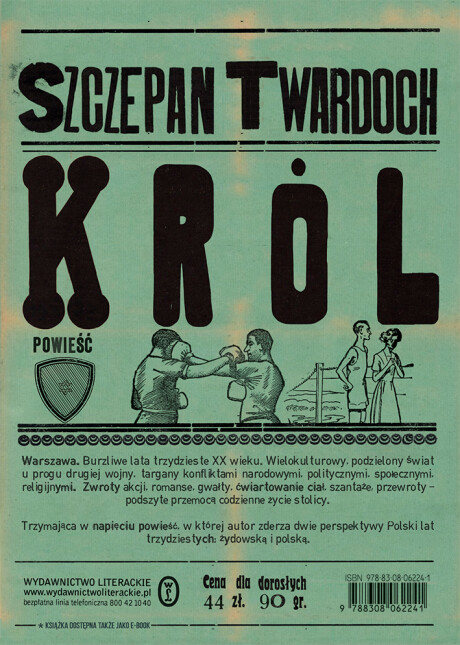
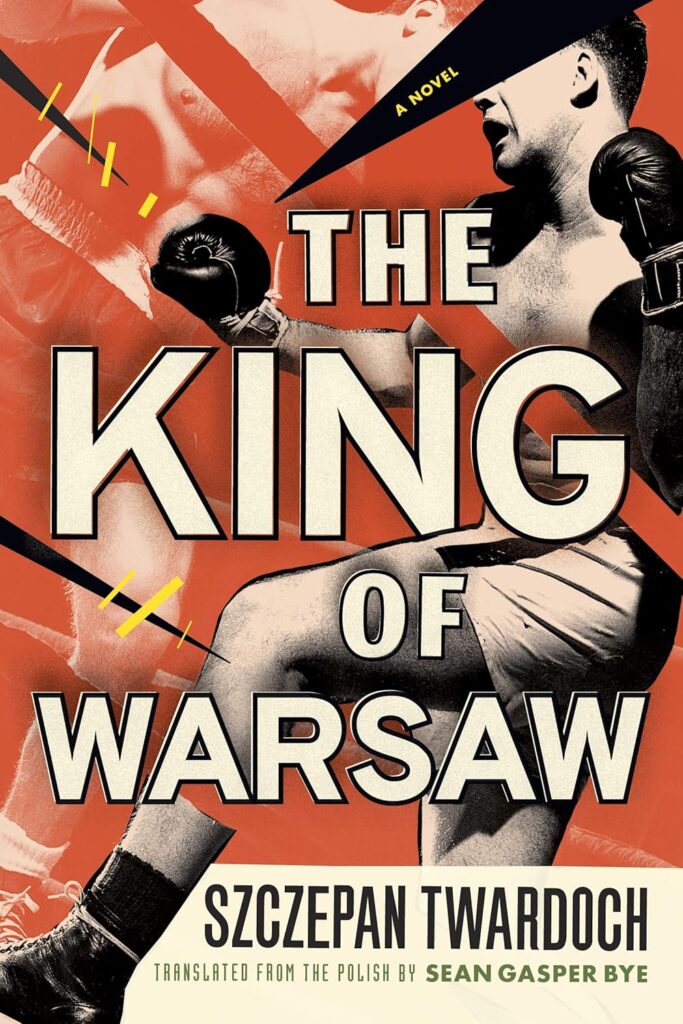
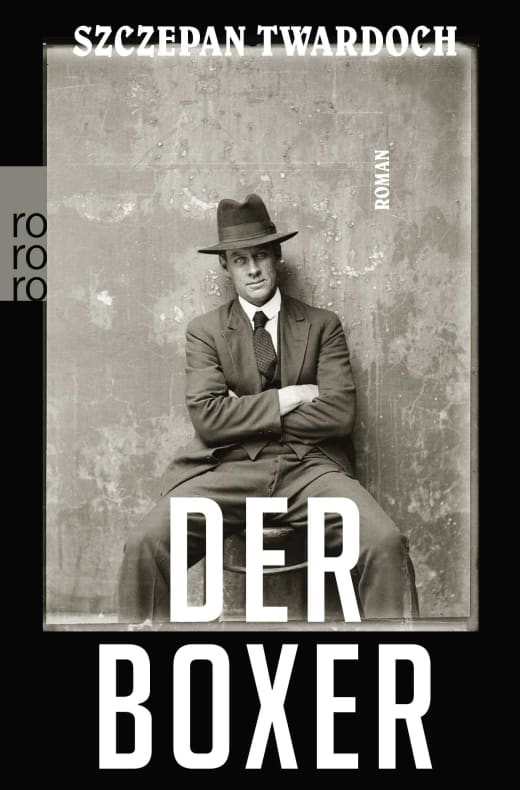
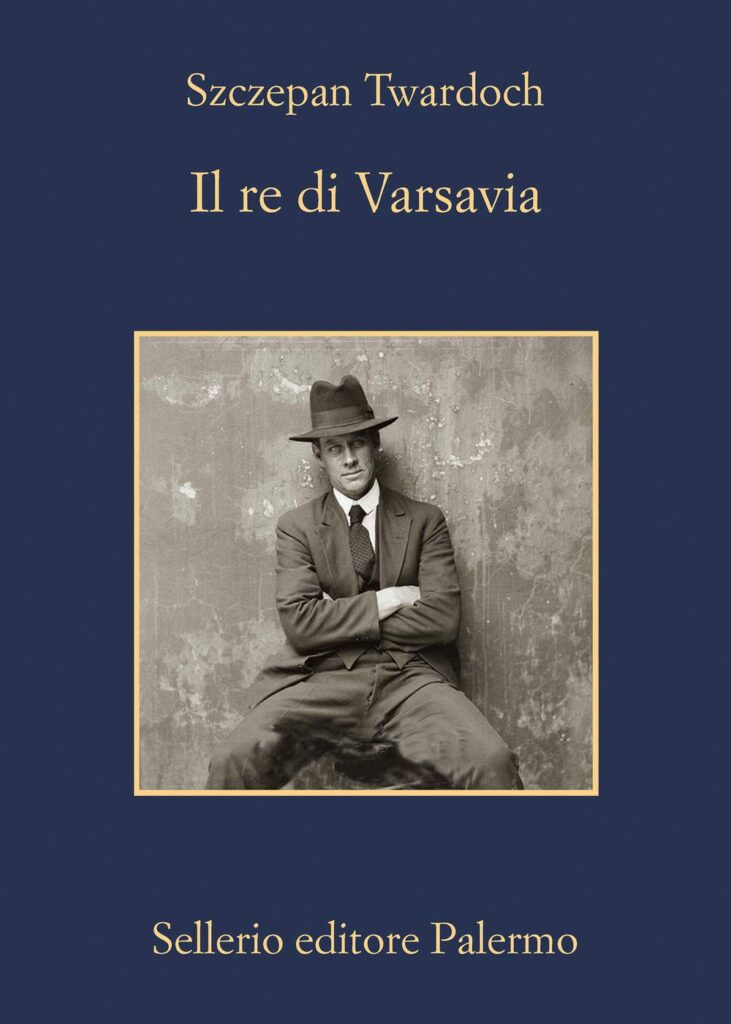
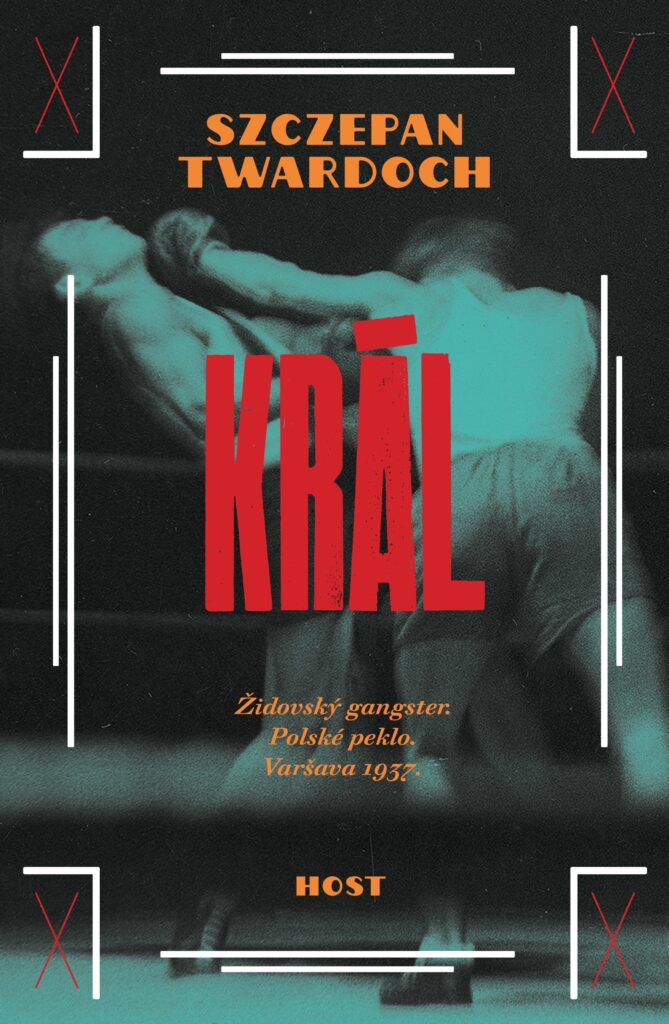
Jewish gangster. Polish hell. Warsaw 1937.
Beautiful cars, women, cold vodka and hot blood. Boxing, neighbourhoods of squalor and luxury brothels, the mud of Wola and the posh streets of Downtown. Jews and Poles. Ghetto benches and street fighting. The ethnic, social, religious and political melting pot of Warsaw 1937. And across all divisions, the rules of a gangster world where power is the most valuable currency.
It all starts in the crowded hall of the City Cinema, where an enthusiastic audience watches a boxing fight. The final bout in the match for the team championship of the capital is underway. Polish fans cheer on Legia’s representative, the well-known falangist Andrzej Ziembiński. From the Jewish stands, cheers rise for Jakub Szapiro, the Makabi Warsaw athlete. It is his night. Amidst the cheers of some and the whistles of others, Shapiro’s triumph is watched by seventeen-year-old Moses Bernsztajn and Kum Kaplica – an old PPS fighter, socialist and king of Warsaw’s underworld.
Forty years later, in Tel Aviv, retired soldier Moshe Inbar leans over his typewriter to revisit the evening he first saw the beautiful, brash and immensely confident boxer in the ring. What he didn’t know at the time was that in 1937 it was Szapiro, Kaplica’s right-hand man, who killed his father over an unpaid debt. He also had no idea how much one evening and a meeting with Kum Kaplica would change his life…
Characters driven by passion, vivid conflicts and emotions, an engaging plot, and its unpredictable twists plus the first truly fascinating and unmythologized portrait of a Jewish hero in post-war Polish literature, as well as the captivating depiction of 1930s Warsaw. A literary knockout.
The description comes from the publisher’s website.